If you run a customs brokerage or freight forwarding operation, you already know that documentation eats your day. What you probably have not done is timed it. Not the “about 30 minutes” estimate you give clients, but the actual minutes your team spends on each task for a single import entry, from the moment the shipping documents land in their inbox to the moment the ACE filing is submitted and the cargo release comes back.
We broke it down. The total for a standard ocean import entry, handled manually with no automation, averages 45 to 60 minutes per shipment. For complex entries involving multiple HTS classifications, PGA requirements (FDA, USDA, EPA), or trade preference programs like USMCA, it climbs to 90 minutes or more.
That number is the single biggest constraint on your operation’s throughput, and it is the reason your team maxes out at a fraction of the entry volume they could handle.
The 45 Minute Breakdown: Where the Time Actually Goes
Here is the task-level anatomy of a standard US import customs entry, timed against what experienced brokers report and what operational data from brokerage software providers confirms.
Document collection and review: 8 to 12 minutes
This is the unglamorous starting point that consumes more time than anyone expects. Your broker or entry writer opens the shipment file and begins pulling together the required documents: commercial invoice, packing list, bill of lading or air waybill, and any certificates (origin, phytosanitary, fumigation). For a clean shipment where the shipper has provided everything correctly, this takes 8 minutes. In reality, documents arrive across multiple emails, some as PDFs, some as photos, some embedded in the body of an email. Invoices are frequently missing line-level detail, weights are inconsistent between the packing list and the B/L, and product descriptions are vague enough to make classification guesswork.
Your team spends time chasing the missing piece, cross-referencing documents for consistency, and flagging discrepancies before they cause a customs hold downstream. CBP penalties for documentation errors averaged $15,000 per incident according to 2025 industry data. A single missed discrepancy here cascades into hours of rework later.
HS tariff classification: 10 to 15 minutes
This is where the real expertise lives, and where the most expensive errors happen. For each line item on the commercial invoice, your broker must determine the correct Harmonized Tariff Schedule (HTS) code. A straightforward single-commodity shipment with a product your team has classified before takes 5 to 8 minutes of verification. A shipment with 3 to 5 distinct product types, especially if any are in ambiguous tariff headings, takes 15 minutes or more.
Misclassification is not a trivial risk. US CBP collected over $2 billion in fines in 2025, and HS classification errors account for a significant share of customs holds and penalty assessments. The difference between an 8-digit HTS code that carries a 2.5% duty rate and one that carries 25% can be a single product characteristic that is not clearly described on the commercial invoice.
AI-assisted classification tools are now available that analyze product descriptions against historical classification data, but as of 2026, most small to mid-size brokerages are still doing this manually with the HTS database open in one tab and the invoice in another.
Customs value determination: 5 to 8 minutes
Declared value drives duty calculation. Your team must verify the transaction value on the commercial invoice, determine whether it includes or excludes freight and insurance (the CIF vs. FOB distinction), apply the correct valuation method under GATT rules, and calculate the applicable duty rate against the HTS code. For simple shipments, this is 5 minutes of arithmetic. For entries involving assists, royalties, or related-party transactions, the valuation analysis can consume 15 to 20 minutes per shipment.
ISF / 10+2 filing (ocean shipments): 5 to 7 minutes
For ocean freight, the Importer Security Filing must be submitted to CBP at least 24 hours before the vessel departs the foreign port. This requires 10 data elements from the importer and 2 from the carrier. Your team pulls manufacturer name and address, seller information, buyer information, ship-to party, container stuffing location, consolidator, HTS numbers, and country of origin from the shipping documents and enters them into the filing system. Each field must match what will appear on the entry. Inconsistencies between the ISF and the subsequent entry filing trigger CBP targeting flags.
ACE entry preparation and filing: 10 to 15 minutes
This is the core filing step. Your broker enters the entry data into their brokerage software (Descartes, CargoWise, QP/WP, or similar), which transmits to CBP via the Automated Broker Interface (ABI) into the ACE system. The data includes B/L information, HTS codes, declared values, country of origin, importer of record details, and any PGA data elements required for the specific commodity.
For a clean, single-line entry with no PGA involvement, an experienced filer can complete this in 10 minutes. Multi-line entries with FDA prior notice requirements, EPA TSCA certifications, or USDA APHIS data add 5 to 15 minutes per additional agency. The filing itself is electronic, but the data preparation is manual. Every field is typed or copied from the source documents into the software. Every field is a potential error point.
After submission, your team monitors for the CBP response: release (goods can proceed), hold (additional review required), intensive examination (physical or x-ray inspection), or rejection (errors that must be corrected before processing). Many entries from CTPAT-certified importers receive cargo release within minutes of filing. Entries that trigger holds can add hours or days of additional work.
Entry summary and duty payment coordination: 5 to 8 minutes
After cargo release, the entry summary (CBP Form 7501 equivalent data) must be filed within 10 working days. This includes final duty calculation, Merchandise Processing Fee (MPF at 0.3464% of shipment value, min $27.23, max $528.33), Harbor Maintenance Fee (HMF at 0.125% of value for ocean shipments), and reconciliation of any estimated vs. actual values. Your team reviews the final numbers, coordinates duty payment through the importer’s continuous bond or single-entry bond, and closes the file.
Total for a standard entry: 43 to 65 minutes.
That 45 minute average assumes clean documents, a cooperative shipper, a single commodity, and no PGA involvement. The moment any of those conditions breaks, you are north of an hour. Complex entries with multiple line items, trade preference claims, anti-dumping considerations, or PGA filings routinely hit 90 to 120 minutes.
What 45 Minutes Per Shipment Actually Costs at Scale
If you want to see what this looks like across your operation, run the numbers through the Logistics ROI Calculator. Here is what the math produces at common volume tiers.
50 shipments per month (small brokerage or in-house team)
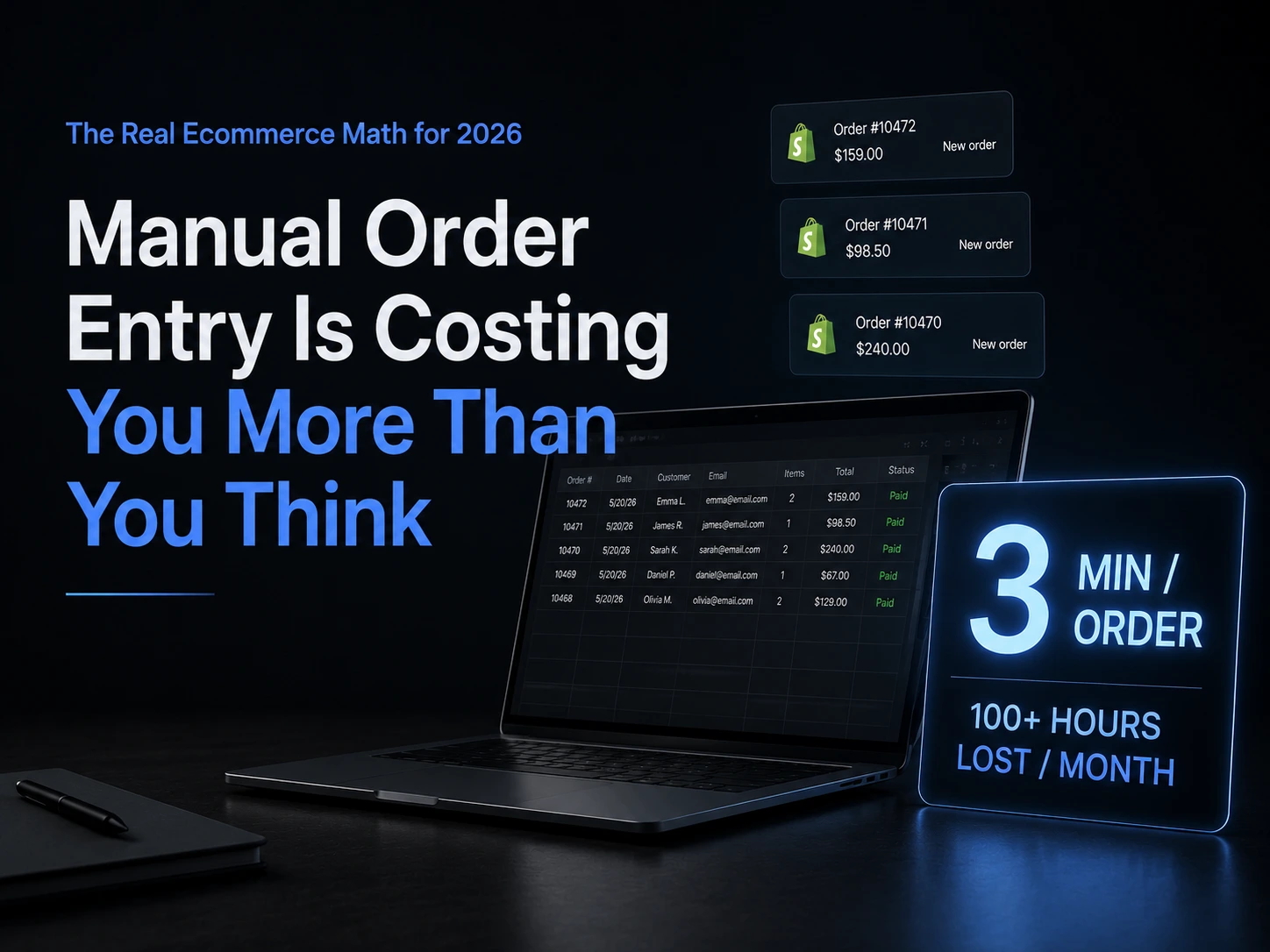
At 45 minutes per entry, that is 37.5 hours per month of pure documentation work. At a loaded cost of $35/hour for an experienced entry writer (salary plus benefits plus overhead), you are spending $1,312/month or $15,750/year on documentation labor alone. One full-time person can handle this volume with time left for other tasks.
200 shipments per month (mid-size brokerage)
Now you are at 150 hours per month. That is essentially one full-time employee doing nothing but customs entries. At $35/hour loaded, that is $5,250/month or $63,000/year. If 20% of those entries are complex (90+ minutes), the actual total is closer to 180 hours and $75,600/year.
500 shipments per month (large forwarder or high-volume brokerage)
375 hours per month. That is 2.3 full-time equivalents dedicated entirely to documentation. At the same loaded rate, $13,125/month or $157,500/year. And this does not include the time your team spends on post-entry amendments, CBP inquiries, or audits related to filing errors.
The labor cost is only half the story. The error rate on manual data entry is the other half.
The Error Multiplier
Every manually keyed field is an error opportunity. Industry benchmarks place manual data entry error rates at 1% to 3% per field. A standard customs entry involves 30 to 50 data fields depending on complexity. At even a 1% per-field error rate, the probability that any given entry contains at least one error is significant.
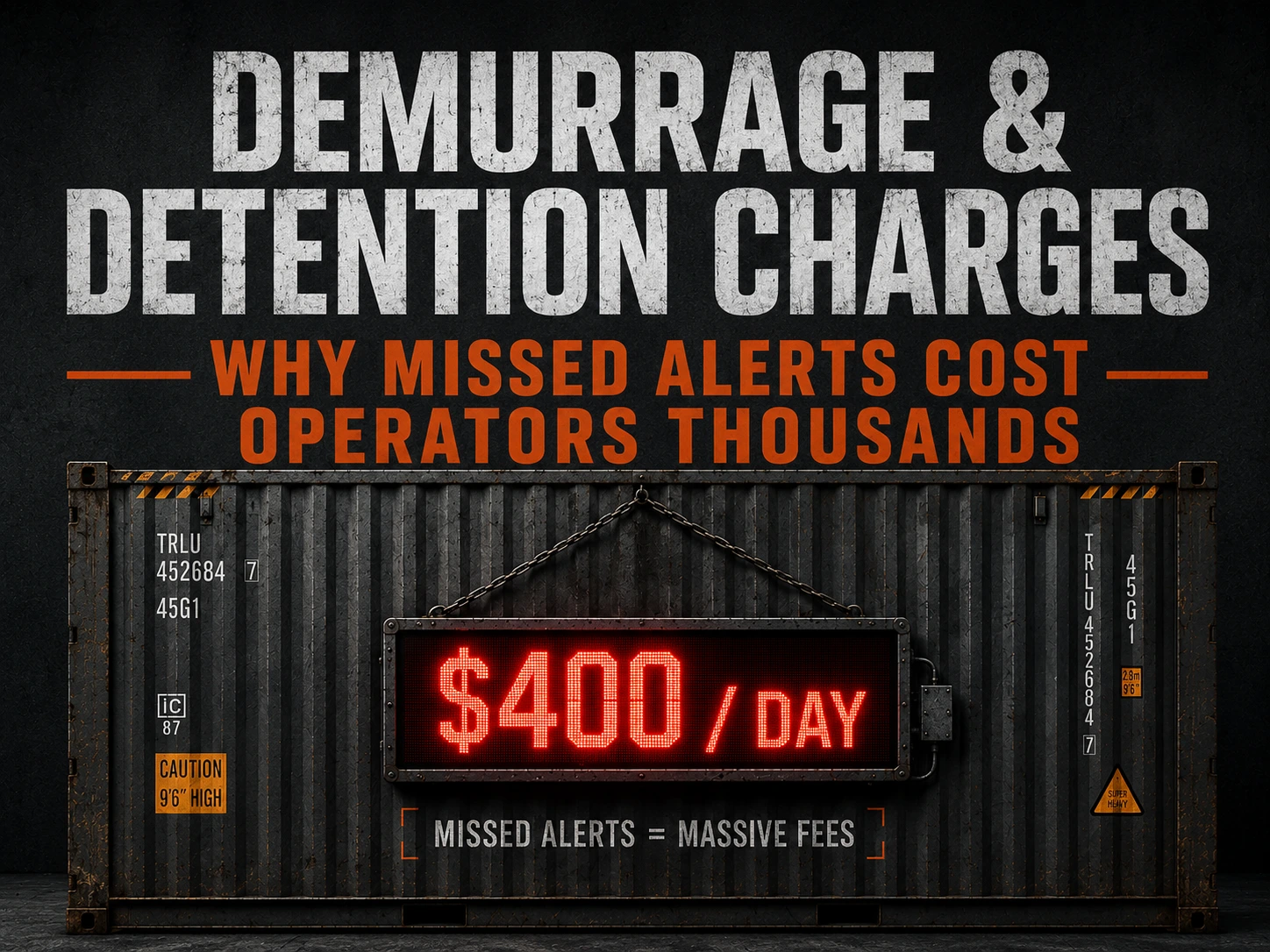
Customs filing errors have real downstream costs. Misclassified HTS codes lead to incorrect duty payments that trigger CBP audits and potential penalties. CBP penalties averaged $15,000 per incident in 2025. Incorrect declared values result in duty underpayments that compound with interest if caught during a focused assessment. Inconsistencies between the ISF and the entry filing flag your shipments for additional targeting, which means more holds, more examinations, and more delays. Delays caused by filing errors are the number one cause of demurrage charges (see our post on demurrage costs), which run $75 to $300+ per container per day at US ports.
A single error that causes a 3-day customs hold on a container at LA / Long Beach can cost $450 to $900 in demurrage alone, before you even count the rework time, the expedited drayage rescheduling, and the downstream impact on your client’s supply chain.
One missed discrepancy in document review can cascade into a 3-day customs hold, $900 in demurrage, and hours of rework. The 45 minutes spent up front is the cheapest part of the workflow.
What Automation Actually Changes
The customs documentation process has three layers where automation delivers measurable time savings.
Document extraction. Automated systems using OCR and AI can extract data from commercial invoices, packing lists, and B/Ls in seconds rather than the 8 to 12 minutes of manual review. The technology is not perfect, but it reduces the extraction step to a verification task rather than a data entry task. That cuts the first step from 10 minutes to 2 to 3 minutes of human review.
HS classification. AI-assisted classification tools analyze product descriptions against historical data and suggest HTS codes. For repeat products (which make up the majority of entries at most brokerages), the system auto-fills the classification with a confidence score. The broker reviews and confirms rather than researching from scratch. This cuts classification time from 10 to 15 minutes to 3 to 5 minutes for standard products.
Filing preparation. When document extraction and classification are automated, the ACE entry preparation step becomes a review-and-submit workflow rather than a type-every-field-manually workflow. Brokerage platforms like Descartes and CargoWise already support ABI transmission. The bottleneck is getting clean data into those systems. Automation closes that gap.
Digital customs platforms reported 25% faster clearance times in 2025 compared to manual processes. The OECD’s 2025 report on trade document digitization found that fully digitized border processes could reduce overall trade transaction costs by 5% to 12% globally. Filing processes that used to take hours now take minutes when the data pipeline is automated.
For a 500-shipment-per-month operation, reducing average documentation time from 45 minutes to 15 to 20 minutes per entry (a realistic target with current automation tools) would reclaim approximately 210 hours per month. That is 1.3 full-time employees worth of capacity freed up, either reducing headcount costs or redeploying existing staff to higher-value work like compliance consulting, client advisory, and business development.
At $35/hour loaded, that is $7,350/month or $88,200/year in labor savings, from the same team, at the same volume.
The Throughput Ceiling You Do Not See
Here is the part that most brokerage owners miss when they think about documentation efficiency. The 45-minute-per-entry constraint does not just cost you labor. It caps your revenue.
If each entry writer can handle 10 to 12 entries per day manually (allowing for breaks, communication, and non-filing tasks), a 3-person entry team maxes out at roughly 700 to 800 entries per month. That is your capacity ceiling. Every new client you add beyond that ceiling requires a new hire, with a 3 to 6 month ramp-up period before the new person files at full speed.
Automation changes the math. If the same entry writer can handle 20 to 25 entries per day with automated extraction, classification, and filing prep, your 3-person team can process 1,200 to 1,500 entries per month. Same headcount. Same overhead. Double the throughput.
That is the difference between a brokerage that grows linearly (one hire per X new clients) and one that grows on leverage (same team, more volume, higher margins).
What to Do With These Numbers
If you run a CHA or freight forwarding operation and you have never timed your documentation process at the task level, start there. Have your entry team track actual minutes on their next 20 entries, broken out by the categories above. You will almost certainly find that your “30 minute” estimate is actually 45 to 60, and that document collection and HS classification consume more than half of the total.
Once you have your baseline, run it through the Logistics ROI Calculator with your actual volume, staff costs, and error rates. The output will show you exactly how much documentation labor costs you annually and what the savings look like at different levels of automation.
The 45-minute-per-shipment number is not a number you have to live with. It is a number you should be actively working to cut in half. The brokerages that do will handle more volume, make fewer errors, and operate at margins their competitors cannot match.
Sources
- US Customs and Border Protection, Automated Commercial Environment (ACE) system documentation and filing requirements. CBP.gov.
- Federal Maritime Commission, Demurrage and Detention Billing Requirements final rule, February 26, 2024. Effective May 28, 2024.
- Freightos, US Customs Guide 2025: importing and clearance procedures. MPF at 0.3464%, HMF at 0.125%. Published February 2026.
- FreightAmigo, Digital Customs Clearance Platforms 2026: 25% faster clearances for forwarders using digital platforms in 2025. Published February 2026.
- OECD, Digitalisation of Trade Documents and Processes 2025: digitized border processes reduce trade transaction costs by 5 to 12% globally.
- IT Convergence / Oracle: customs automation cuts lead times by up to 20% by eliminating redundant manual steps. Published February 2026.
- CXTMS, Air Freight Customs Clearance Goes Digital, March 2026: CBP fines totaling over $2 billion in 2025; AI-powered HS classification reducing errors.
- MeisterPrep, Automated Commercial Environment glossary: ABI system-to-system connection enables brokers to file hundreds of entries per day; CTPAT-certified importers receive cargo release within minutes.
- FreightAmigo, 2026 Customs Broker Costs guide: per-entry fee structures, documentation preparation workflows, compliance assurance processes, penalty data ($15,000 average per incident, 2025).
- CargoEZ, Automate Customs Compliance 2026 guide: filing processes that previously took hours now take minutes with automation.
- Skyvern, Automate Freight Broker Portals, March 2026: freight brokers spend $104K to $156K yearly on manual portal data entry; 3 to 5 documents generated per completed load.